The Daily Mail Online - Tiger attack in India
- Visitors per day
- 11 miljoen
Publication of my article with accompanying photos of a tiger attack in India at the website of online edition of The Daily Mail (UK). The Daily Mail Online has over 11 million visitors daily. I shot these unique wildlife photos of a tiger at Tadoba national park in central India.
The article
The Daily Mail Online (MailOnline) · by Lydia Willgress · 20 February 2015 · photos: Stefan Cruysberghs
Watch your back! Amazing moment tiger lunges at three unsuspecting deer … who just manages to escape
- Bengal tiger caught stalking three deer in Tadoba Andhari reserve in India
- Crept through water to shock prey but didn't manage to catch one
- Estimated that there are around 2,200 Bengal tigers left in the world
A Bengal tiger hoping for an easy dinner went home empty-handed after setting her sights on three unsuspecting deer.
The big cat waited patiently for more than ten minutes and moved closer through the water every time the deer dipped their heads to take a drink.
But despite having the element of surprise the three lucky mammals managed to escape the vicious attack - and were even brave enough to venture back into the water.
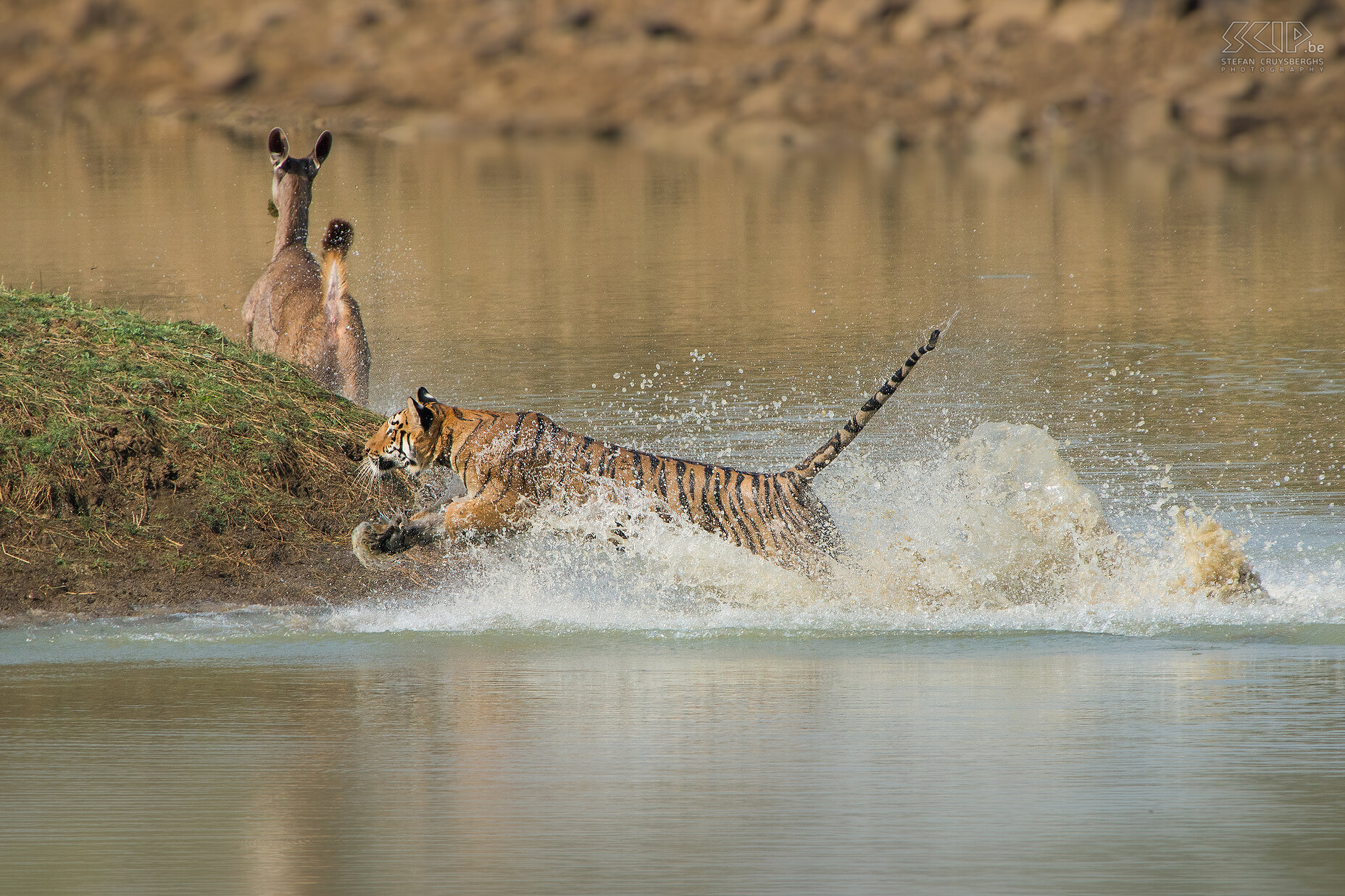
The dramatic scenes were captured by Stefan Cruysberghs at the Tadoba Andhari Tiger Reserve in India.
The 38-year-old software developer, from Lommel, Belgium, said: ‘During our drive we stopped at a waterhole and three Sambar deer were drinking in the middle of the pool. Suddenly, we saw a tigress coming out of the high grass and sneaking into the water. What followed was one of the most exciting and amazing events in nature I have ever witnessed.’
Stefan said that every time the deer bent their head to drink, the tigress swum closer. He said: ‘After about five minutes, when she had approached the deer at a distance of about 12 metres, she started her ultimate attack. The three deer got away, but it was a thrilling moment.’
Before the attack the three Sambar deer have no idea what is going to happen and take it in turns to drink from the cool water.
As she cautiously makes her way through the shallows, she keeps a watchful eye on the deer to ensure that none of them turn round.
Photographer Stefan Cruysberghs said that every time the deer bent their head to drink, the endangered big cat swam closer.
Only her ears and nose are visible as the canny tigress swims carefully through the water towards the deer.
Stefan watched the seven-minute attack take place from around 50 metres away. In most cases a Bengal tiger approaches its victim from the side or behind. Once it has caught its prey, it grasps it by the throat to kill it. Big cats frequently eat wild boar and occasionally grey langur monkeys. They also eat small prey such as porcupine and hares.
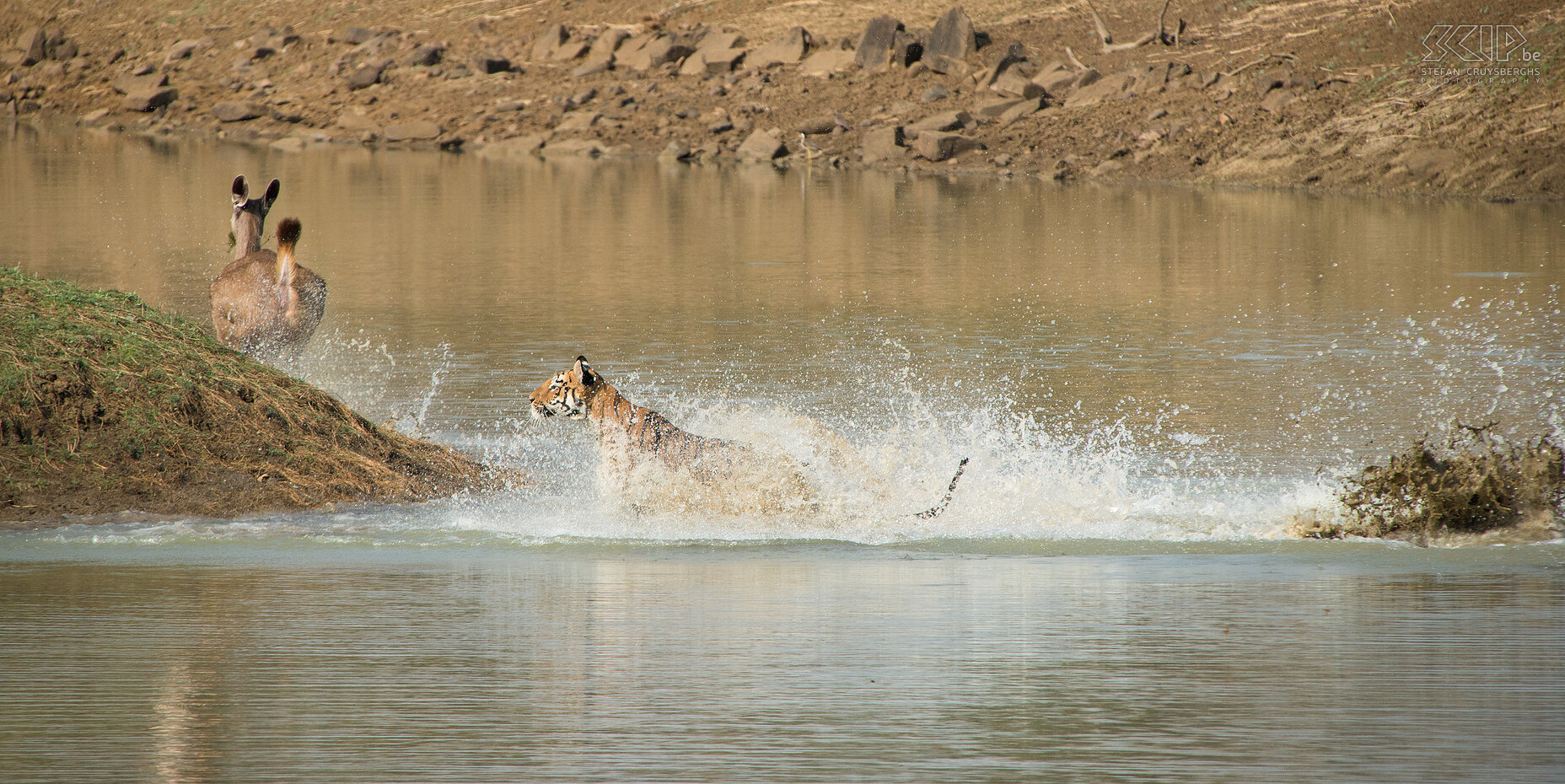
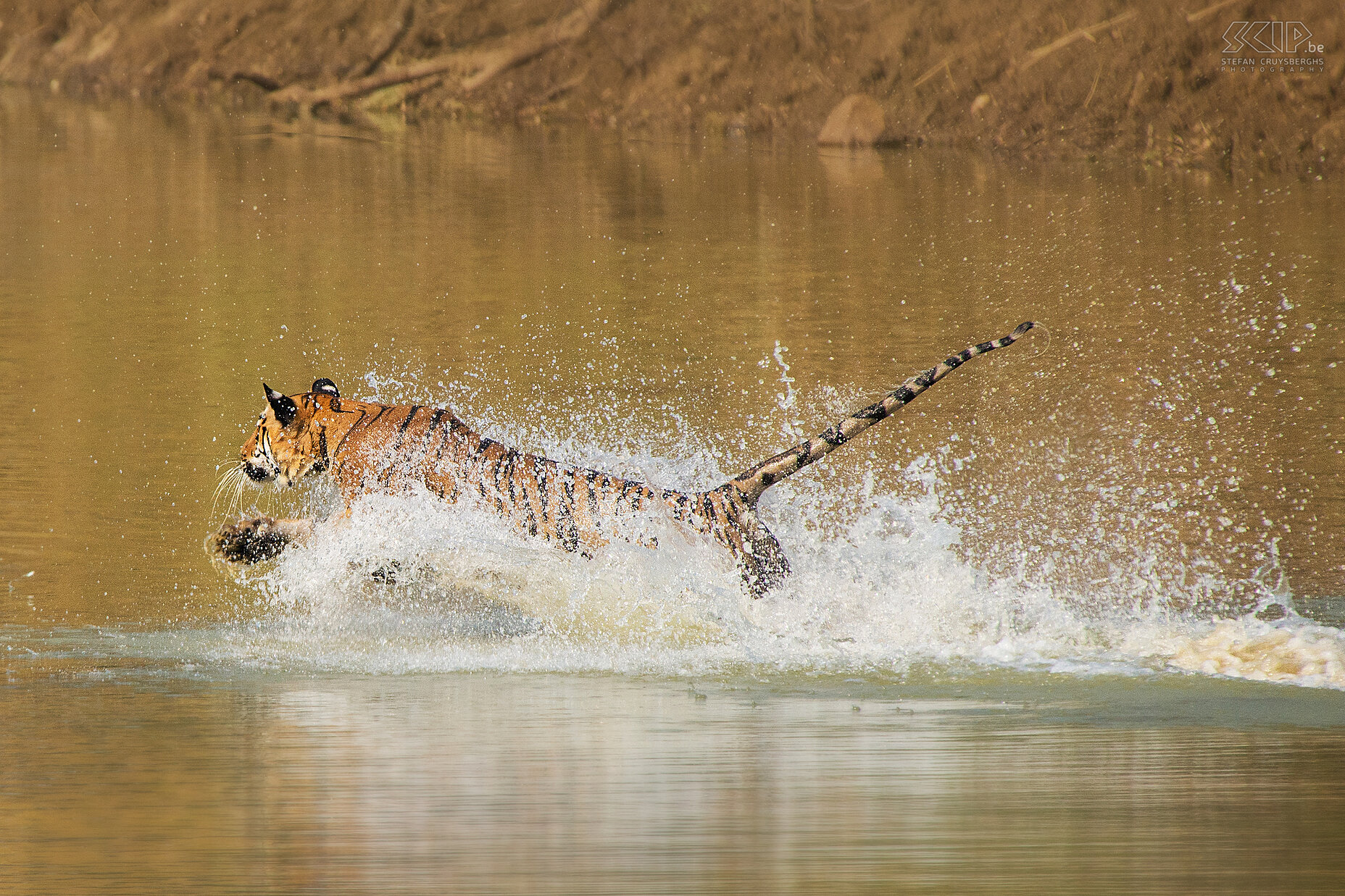
Perhaps due to the tiger’s splashing the deer get plenty of notice and run to the nearest bank to escape.
As the deer disappear into the background the tiger realises her fate. Mr Cruysberghs said: ‘People are really surprised that we were able to witness this. Even our naturalist guide and driver had never seen a tiger attack prey in the water.’
Despite the attack the brave deer made their way back into the water. Stefan said: ‘About twenty minutes later two of the deer came back into the water, fully aware that the tigress was still cooling down in the waterhole. They made alarm calls and were even challenging the tigress. She tried a second desperate attack, but still with no luck. As a tourist it is rare to see big predators hunting in Africa, and in India it is almost impossible. Tigers normally hunt at night so it was a once-in-a-lifetime-experience.’ It is estimated there are approximately 2,200 Bengal tigers in the world.
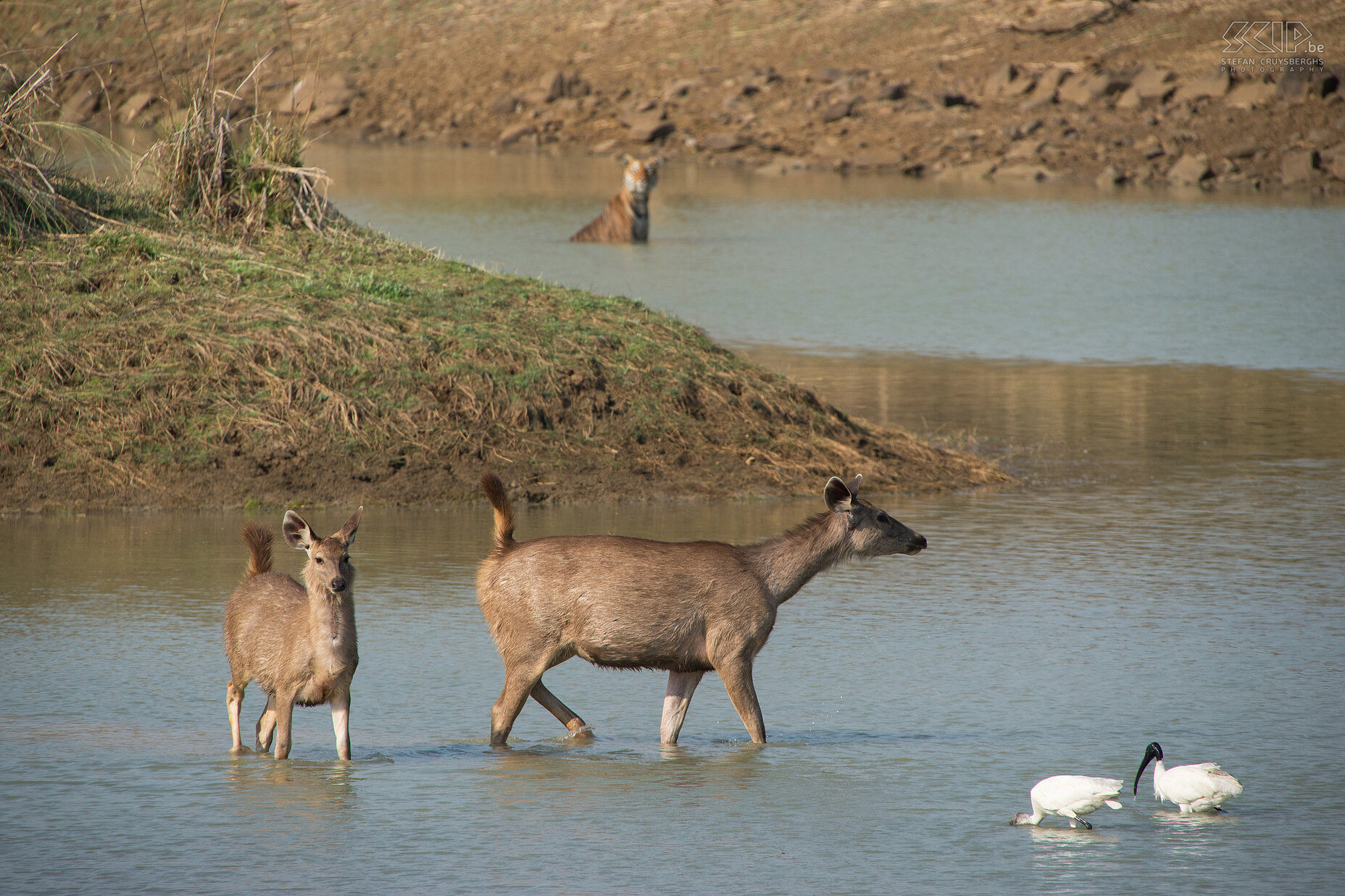
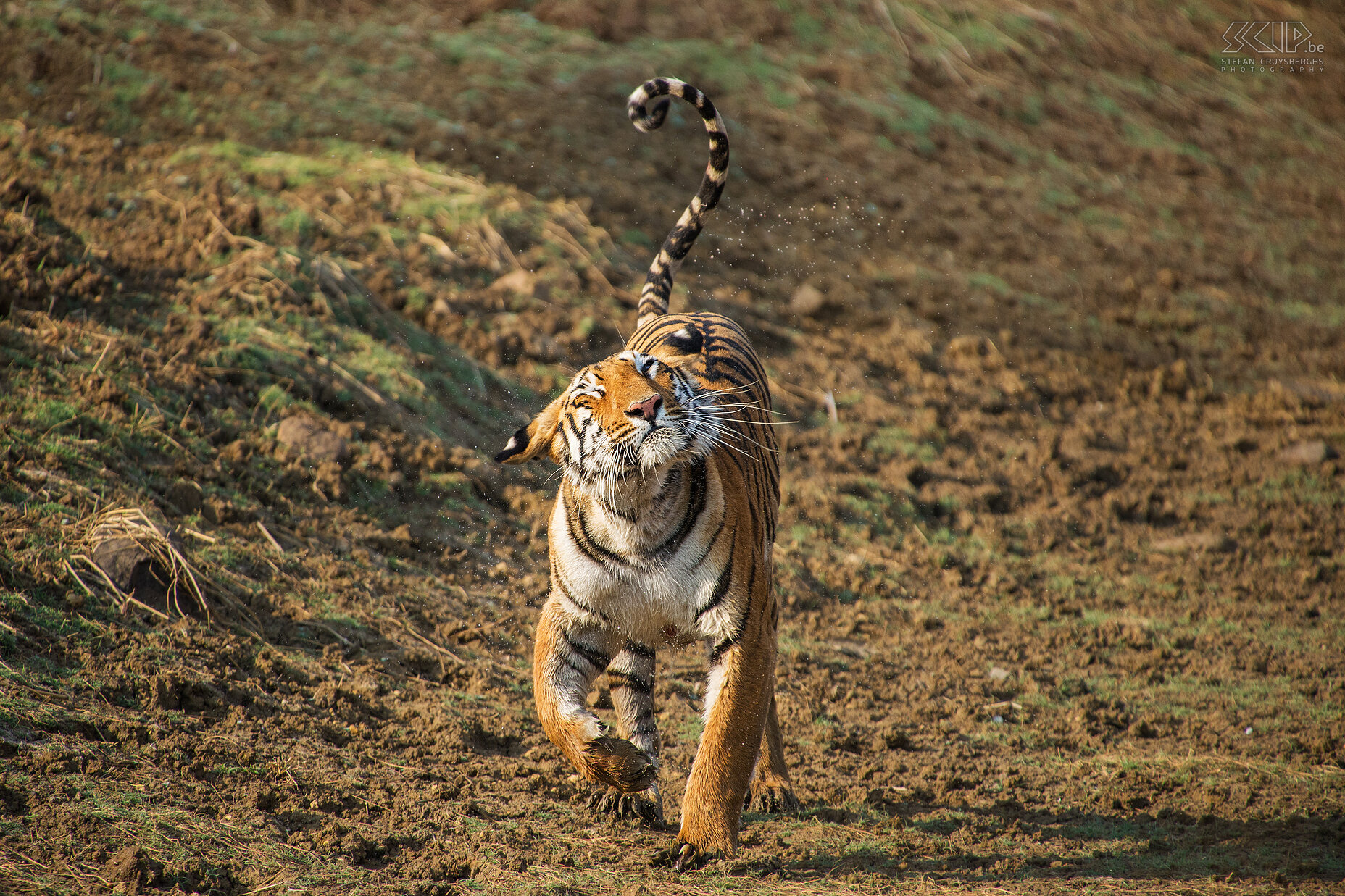
The orange and black cat gives up and goes to the bank to dry off. A hungry tiger can eat as much as 27kg - or four stone.
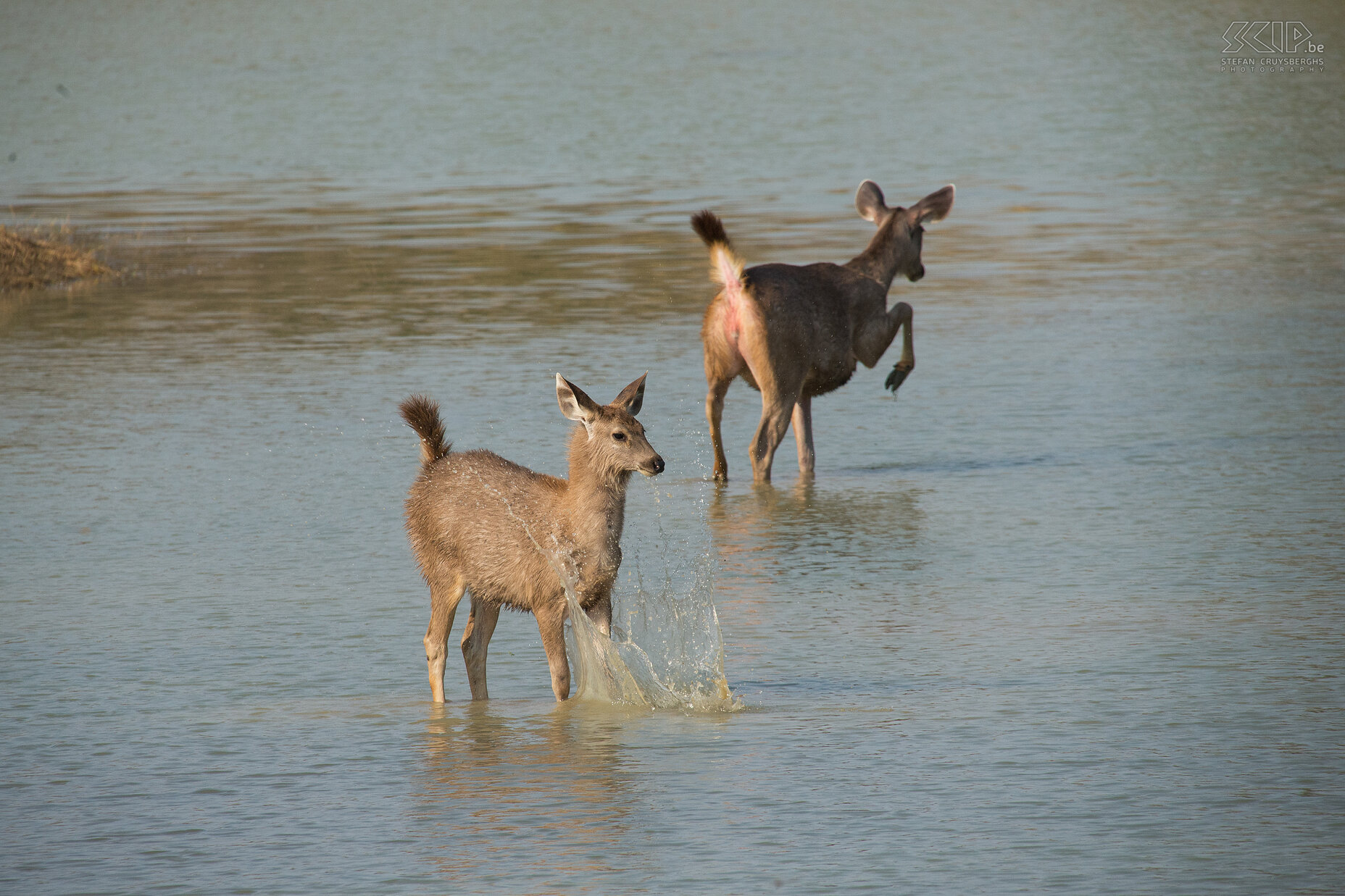
He said: ‘I felt extremely lucky and privileged to see a majestic but endangered tiger attacking deer in the wild. People are really surprised that we were able to witness this and even our naturalist guide and driver in the national park had never seen a tiger attack prey in the water.’
More wonderful wildlife photos of India can be found on the website www.scip.be.